
Bedside lamps for a small bedroom: size, shade and switch

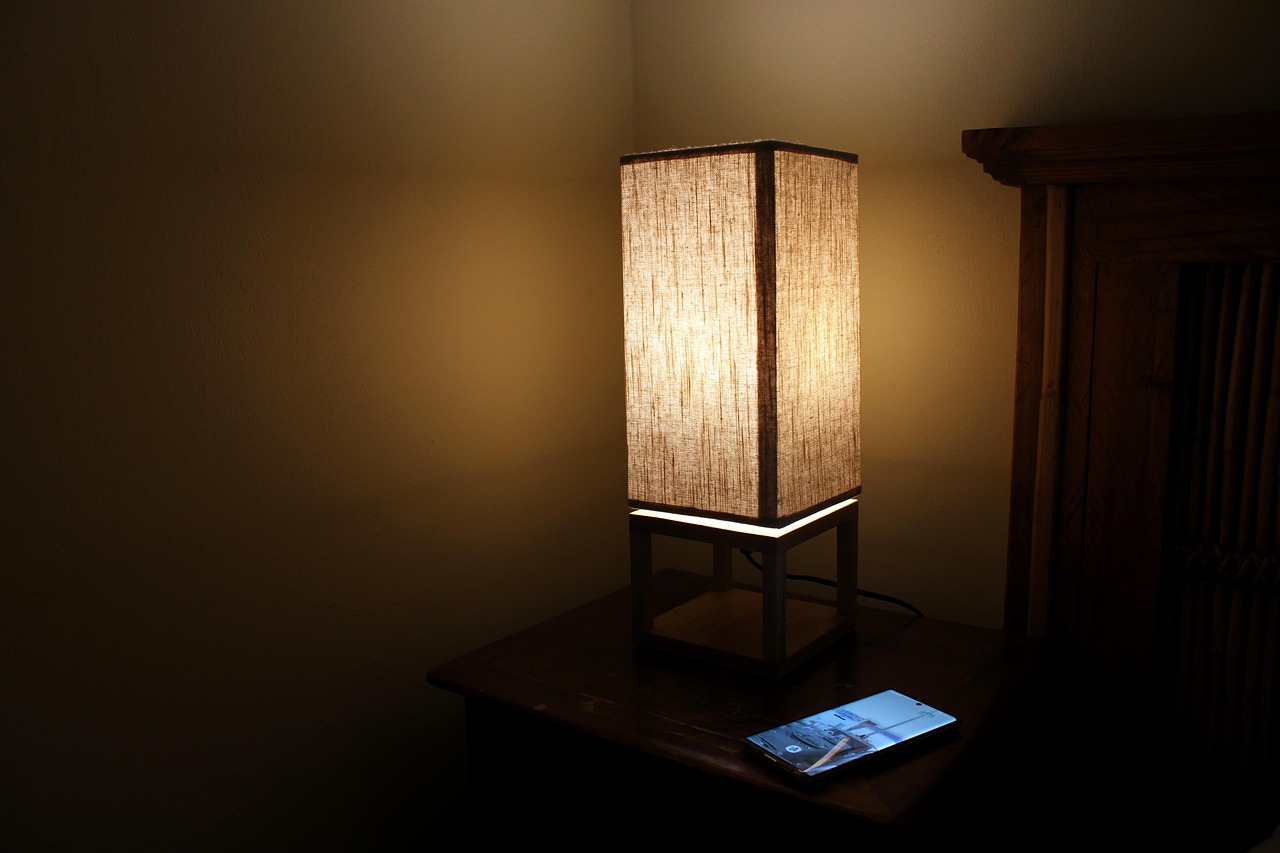
Bedside lamps for a small bedroom: size, shade and switch
A bedside lamp in a small bedroom has three jobs: light for reading, a low glow at night, and not taking up the whole nightstand. Most of the decision is about physical size and where the switch is.
Measure first
A lamp base of 15cm sounds small until it shares a nightstand with a glass of water, a phone and a book. Measure the surface, decide how much of it the lamp may have, and filter on base diameter before anything else.
Height matters too: the bottom of the shade should sit at roughly seated eye level so the bulb is not in your eye line when you are reading in bed.
The shade does the work
An opaque shade throws light up and down and leaves the middle dark, which is good for reading and poor as a room light. A translucent linen or paper shade glows all over and lights the room softly.
For a bedside lamp that has to do both jobs, a translucent shade with a fairly open bottom is the usual compromise.
Switch position
A switch on the flex or a touch-sensitive base can be found in the dark. A rotary switch under the shade cannot, and you will knock the lamp over looking for it. This sounds trivial and it is the thing people complain about most.
Touch lamps with three brightness levels are particularly good beside a bed.
Bulbs and fittings
Check the fitting — E26 is the common US screw base — and the maximum wattage the lamp accepts. With LED bulbs the wattage limit is rarely a constraint, but the physical size of the bulb can be: some decorative bulbs will not fit inside a small shade.
Buy a warm bulb, around 2700K, unless you specifically want a cooler light for a workspace.
Dimmable, and dimmable with what
If you want dimming, either the lamp has to have it built in or you need a dimmable bulb and a compatible dimmer. A non-dimmable LED on a dimmer flickers and fails early.
Built-in touch dimming avoids the whole compatibility question and is the simpler route.
Stability
A tall lamp on a narrow base beside a bed will be knocked over. A wide, weighted base is worth more than an elegant one in a room where someone reaches across in the dark.
In a child’s room, stability is not optional and a cable clipped to the wall is sensible.
Materials in a small room
Pale shades bounce more light and make a small room feel larger; dark shades create a pool of light and a darker room. Wooden and ceramic bases feel warmer than metal ones and hide fingerprints better.
None of this affects function; it affects whether the room feels the way you want it to.
What to check on a listing
Base diameter, total height, shade material, switch type, bulb fitting and whether it dims. Every lamp on our shop page carries those. If you know your nightstand dimensions, the counter on Canal Street can narrow it to two or three quickly.
Wall-mounted alternatives to a table lamp
Where a nightstand is genuinely too small, a wall light with a swing arm takes no surface at all and can be angled onto a book without lighting the whole room. Plug-in versions avoid the wiring question entirely and can be routed down the wall in a clip.
They also cannot be knocked over, which in a child’s room or beside a bed people get in and out of at night is worth as much as the space saved.
Two lamps or one
In a shared bedroom, two small lamps almost always beat one larger one: each person gets their own switch and their own light level, and neither has to reach across. Two modest lamps also light a room more evenly than one bright one.
If space allows only one, put it on the side of whoever gets up at night and choose one with a dimmer, so the other person is not woken by full brightness at two in the morning.
Cable management beside a bed
A lamp flex trailing across a nightstand and down behind it collects everything and eventually pulls the lamp over. A single adhesive clip on the back edge of the nightstand and another at the skirting keeps the cable out of the way permanently.
If the socket is on the far side of the bed, run the cable under the bed rather than around it. And where the lamp shares a socket with a phone charger and a monitor, a small surge-protected strip mounted to the underside of the nightstand tidies the whole cluster.
The short version
- Measure the nightstand before falling for a lamp.
- The shade decides how the light behaves more than the bulb does.
- A touch base or an in-line switch beats a switch under the shade.
- Check the bulb fitting and the maximum wattage.
From our shelves
- Touch Bedside Table LED Lamp, [Sleek Design & RGB Mode] Multi-Color Dimmable with Warm White — $17.99
- EDISHINE Tripod Table Lamp, Small Cute Bedside Lamp, 14.2 Inch, E26 Base — $25.99
Where to go next
Browse the full range on the shop page, read the frequently asked questions before ordering, or check delivery timing on the Shipping Policy page. If you would rather ask a person, contact us — the phone reaches the counter.